
Dr. Emil offers four evidence-based myopia control treatments. Selection depends on your child's age, refractive error, rate of progression, corneal topography, ocular health, and visual demands, alongside the wear schedule your family can maintain consistently. Some patients are managed on a single modality, others on combination therapy. Axial length is measured at every visit, and the treatment plan is adjusted based on measured response.
Find The Right Treatment Plan for Your Child
Orthokeratology (Ortho-k)
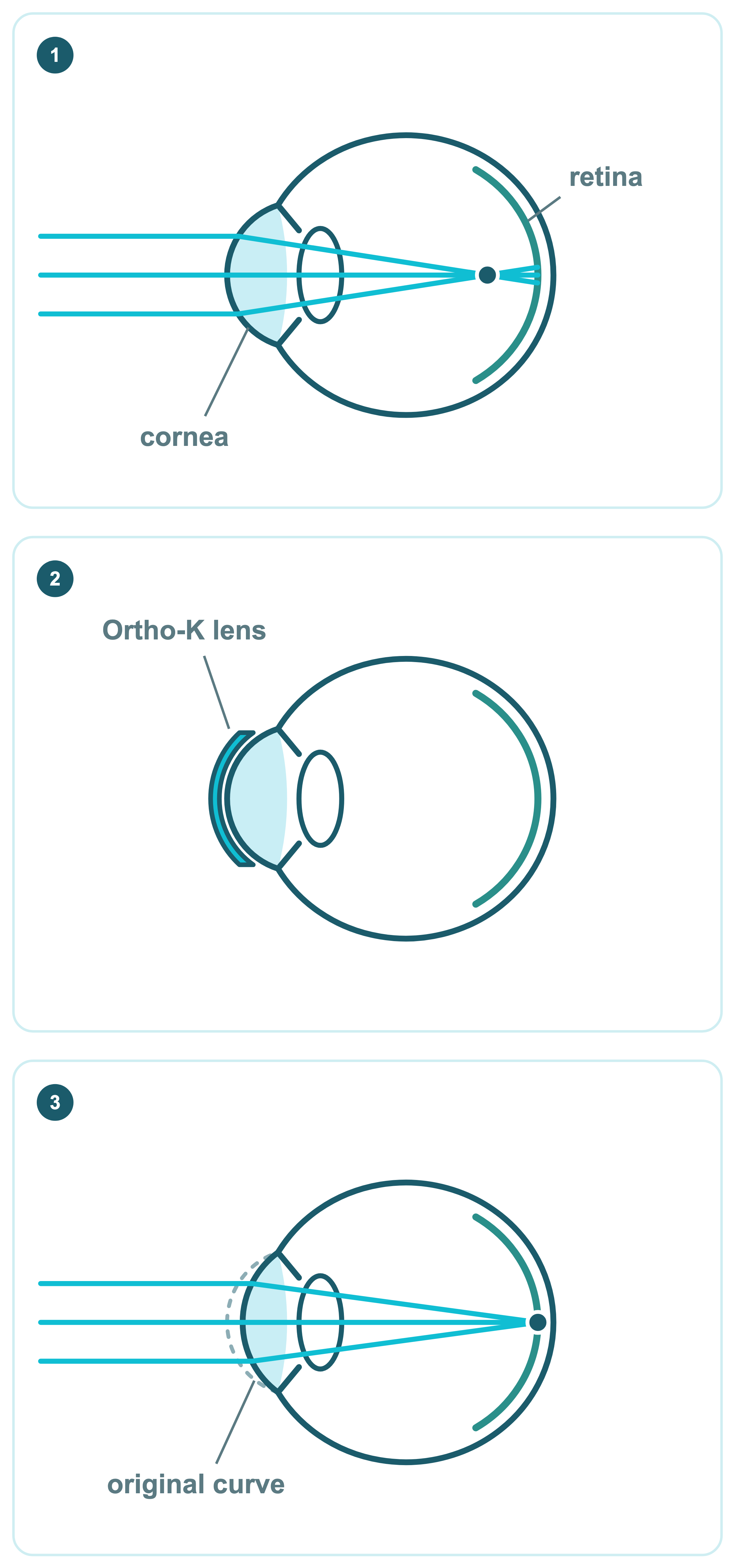
Our specialty. Across randomized trials, children wearing Ortho-K show roughly 45% slower eye growth than children in standard glasses, an effect that holds over two to three years. The lenses have been FDA-approved for overnight vision correction since 2002, and the treatment is surgery-free and fully reversible.
-
Custom rigid lenses worn only during sleep. Overnight they gently reshape the front of the eye, then come out in the morning. Your child sees clearly all day with nothing on their eyes. The reshaping also slows the eye growth driving the prescription up.
-
Children and teens with mild to moderate myopia, especially those active in sports or swimming. Adults choose Ortho-K too, for clear daytime vision without glasses or contacts. Dr. Emil maps each eye and designs the lenses around it.
-
Lenses go in at bedtime and come out at breakfast. Vision improves over the first week or two of nightly wear. Ortho-K is surgery-free and fully reversible, so the eye returns to its original shape if your child stops.
Daytime Soft Contact Lenses
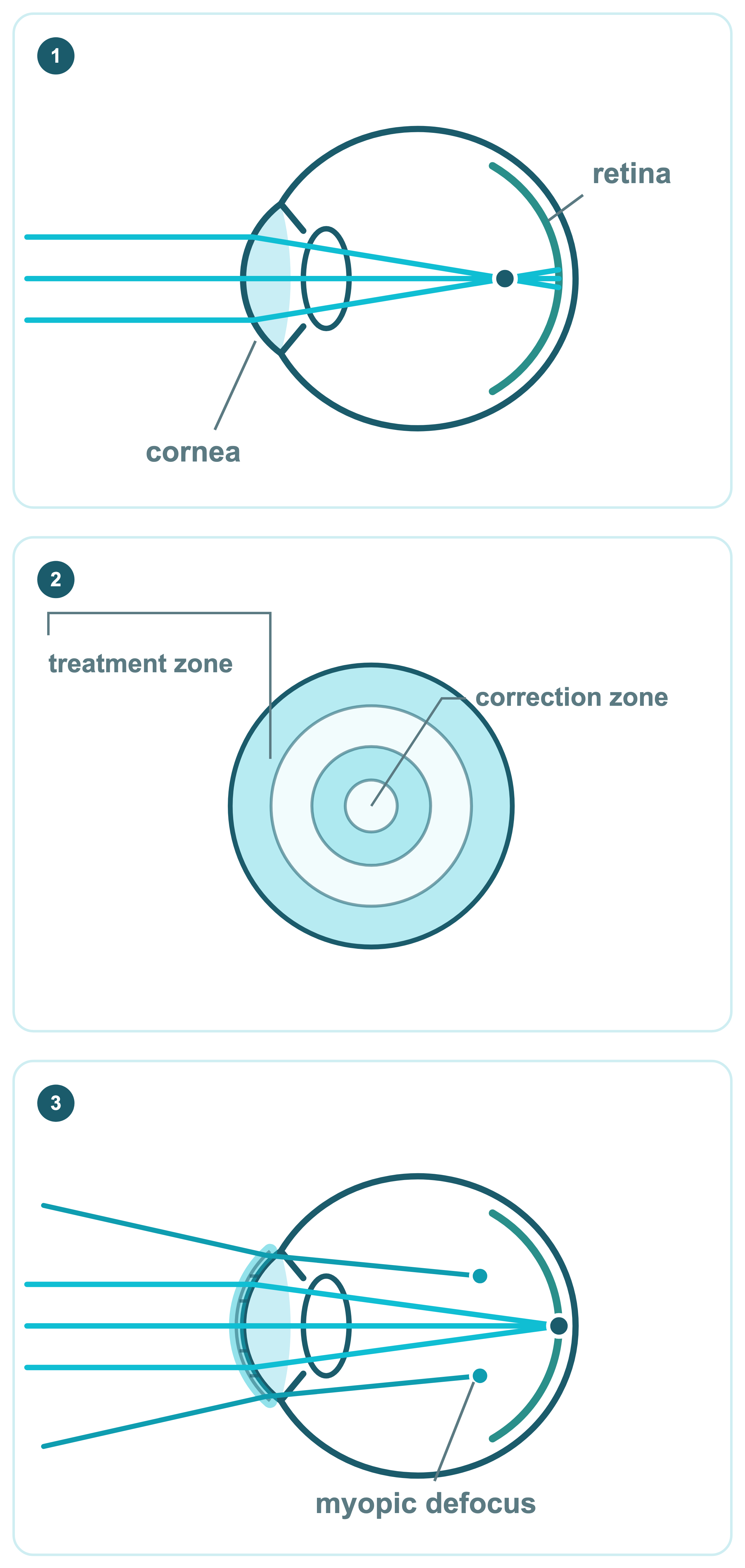
A daily lens that does two jobs.
-
Soft daily lenses built with a special optical design that slows how fast the eye lengthens while correcting your child's vision. Your child wears them like ordinary contacts, and the treatment happens throughout the day.
-
Children ready to handle contact lenses who prefer a daytime option, and children who are not candidates for Ortho-K. MiSight® 1 day is FDA-approved for slowing myopia progression in children ages 8 to 12.
-
In each morning, out each night, then discarded. No cleaning solution and no lens case. Your child gets clear vision and myopia control from the same lens.
Low-Dose Atropine Eye Drops
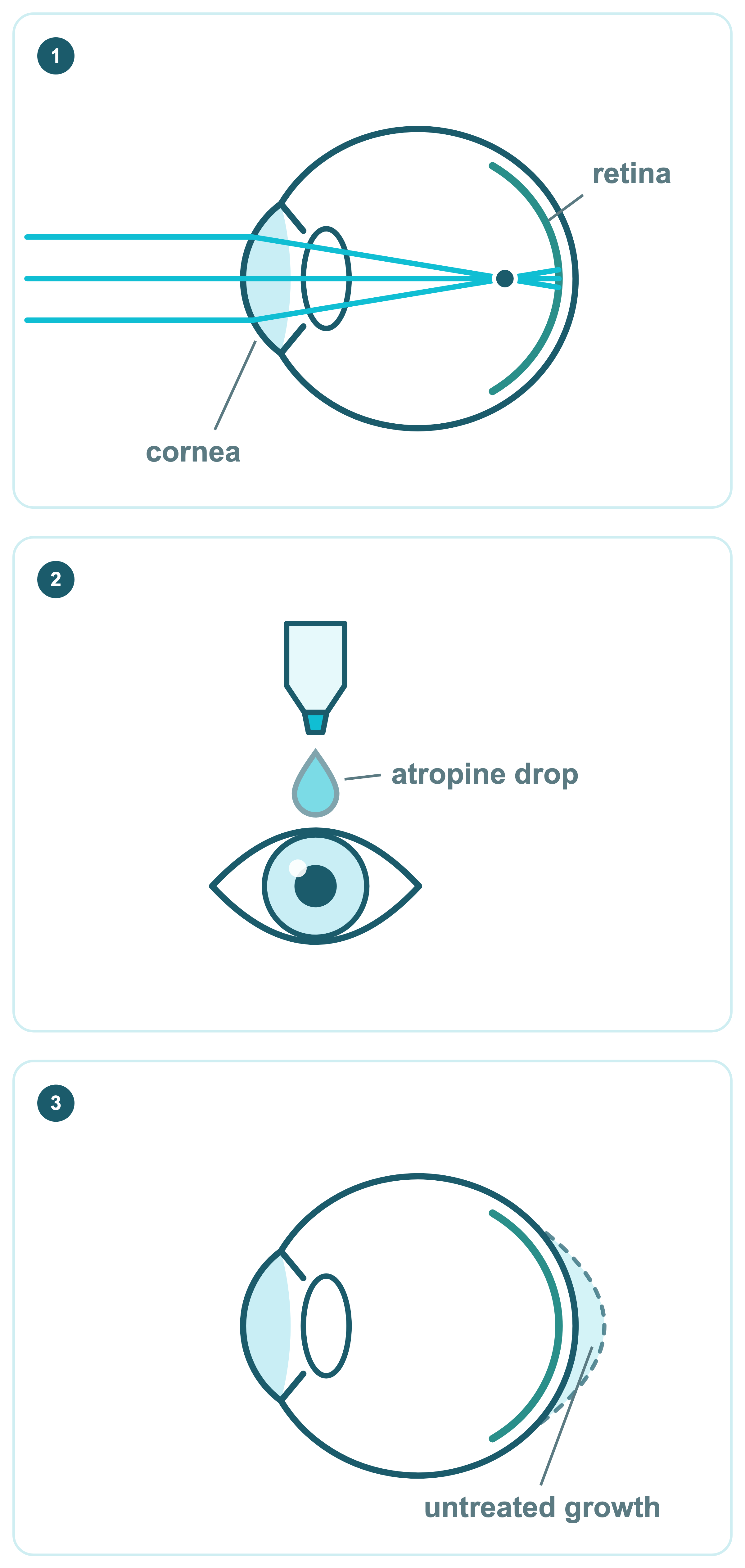
One drop at bedtime.
-
A single eye drop at a low concentration, given at bedtime. It slows the eye's elongation without affecting your child's vision during the day. Atropine is often used alongside lenses or glasses rather than on its own.
-
Very young children, families who want the simplest possible routine, and children whose myopia is progressing quickly despite another treatment. Dr. Emil determines the right concentration for your child.
-
One drop in each eye before bed. Most children have no daytime side effects at low concentrations. Some notice mild light sensitivity or slightly blurred near vision, which Dr. Emil monitors at every visit.
Myopia Control Glasses
Glasses that do more than correct.
-
Spectacle lenses designed to slow eye growth, not only to correct blur. The center of the lens gives clear vision while the surrounding zones signal the eye to grow slower. They look and feel like regular glasses.
-
Younger children, families who prefer glasses to contact lenses, and children who need a reliable option alongside another treatment. A good starting point when a child is too young for contacts.
-
Your child wears them full time, the same as any pair of glasses. The treatment depends on consistent wear, so Dr. Emil will talk through how many hours a day your child needs them on.